Introduction
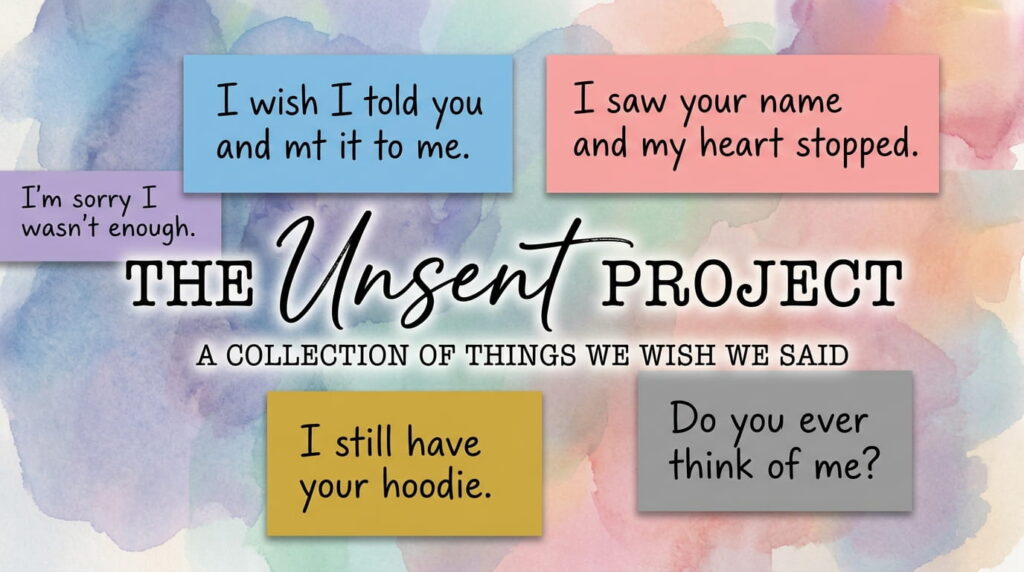
In a world where communication has become instant and effortless, some of the most powerful words remain unspoken. These are the messages we type, feel deeply, sometimes even rewrite—but never send. The Unsent Project captures exactly this silent emotional space, turning unspoken thoughts into a collective human archive of feelings.
At its core, the project is a reflection of emotional honesty. It allows people to express what they could not say in real life—whether due to fear, timing, distance, or emotional complexity. These unsent messages become more than just words; they transform into emotional snapshots of moments that still linger in memory.
What is The Unsent Project?
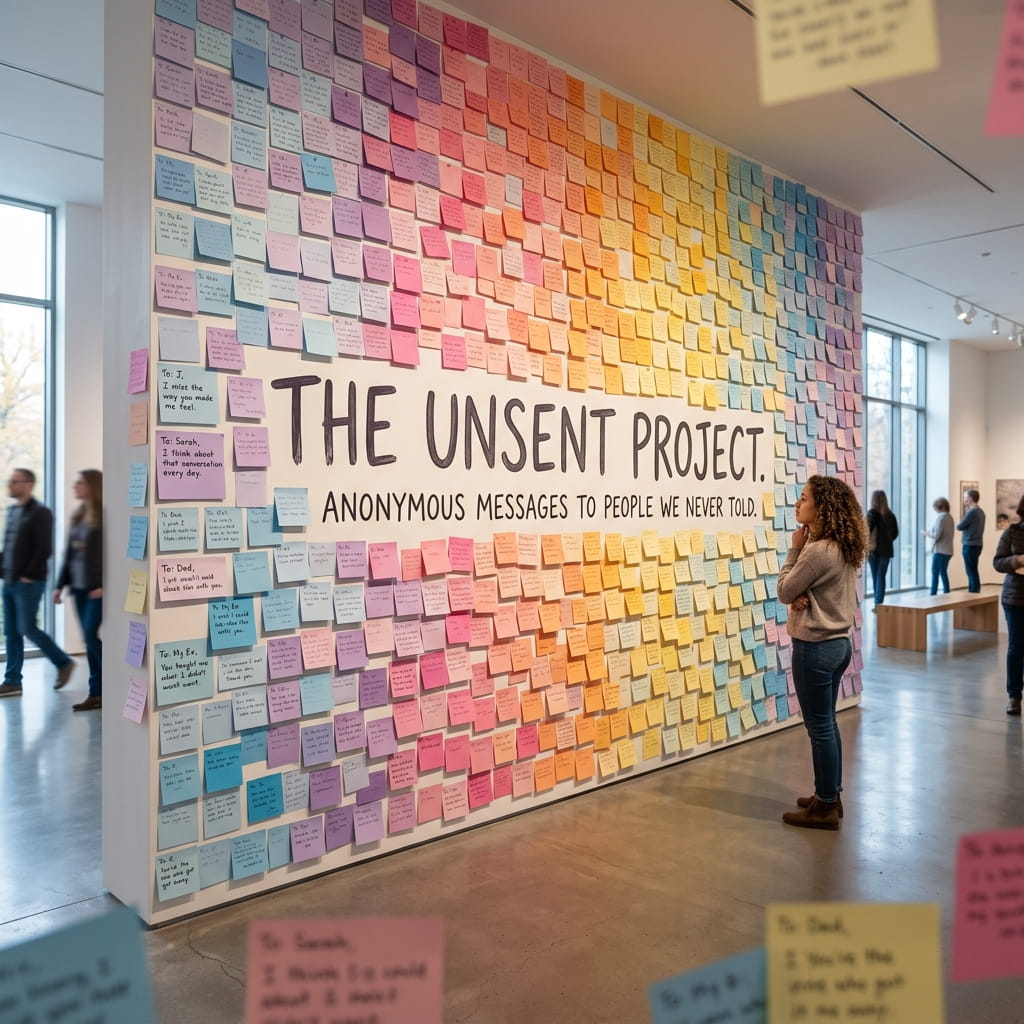
The Unsent Project is a creative and emotional digital collection of anonymous messages that people have written but never sent to someone significant in their lives. These messages are often addressed to ex-lovers, friends, family members, or even to themselves. Each submission carries raw emotion—love, regret, anger, longing, or closure that was never achieved in reality.
What makes the project unique is its emotional honesty. There is no filter, no correction, and no expectation of response. It exists purely as expression—words that were meant to be said but remained trapped in thought.
In essence, it is:
Why Unsent Messages Matter
Unsent messages carry a unique emotional weight because they represent the “almost moments” of our lives—the conversations we rehearsed in our minds but never actually expressed. These messages matter because they reflect real human vulnerability.
People often hold back their true emotions due to fear of rejection, misunderstanding, timing, or emotional consequences. Because of this, many important feelings remain unspoken and unresolved.
The Unsent Project gives these emotions a place to exist, even if only anonymously. In many ways, these messages are not just about others—they are also about ourselves. They reveal how we process love, loss, regret, and memory in silence.
Emotional Connection with Readers
One of the most powerful aspects of The Unsent Project is its ability to deeply resonate with readers. When people read these anonymous messages, they often find fragments of their own emotional experiences within them. A single sentence can bring back memories of someone they once loved or something they never had the courage to say.
This creates a strong sense of shared emotional experience. Even though each message is written by a stranger, the feelings behind them are universally understood.
It reminds us that emotions such as heartbreak, regret, longing, and love are not isolated experiences—they are part of being human.
Origin and Creator
Background of Rora Blue
The Unsent Project was created by contemporary digital artist Rora Blue, who is known for exploring deep emotional and psychological themes through digital art. Their work often focuses on human emotions, identity, vulnerability, and the silent ways people express feelings in modern life.
Rather than relying only on visual design, Rora Blue’s artistic vision emphasizes emotional storytelling. A key idea behind their work is that not all emotions are openly expressed, and sometimes silence itself carries meaning. This concept became the foundation of The Unsent Project.
How the Idea Started
The idea began with a simple but powerful question: What do people say when they are not able, not allowed, or not ready to say it directly?
This question led to the concept of collecting unsent messages—words and emotions that people write but never actually send. These messages often exist in drafts, notes, or memories, representing thoughts that remain unspoken in real life.
What started as a small creative experiment slowly evolved into a structured emotional archive. People were invited to anonymously submit their unsent messages, and over time, strong emotional patterns began to emerge.
Some of the most common themes included:
These recurring patterns shaped the emotional identity of the project and made it deeply relatable to a global audience.
Evolution into a Global Phenomenon
What started as a personal art experiment grew into a global emotional movement. With platforms like Instagram and Tumblr, it quickly reached a worldwide audience.
It first spread in small creative communities, then gained attention as people connected with its emotional honesty. Soon, it became a global space for sharing unsent messages.
Over time, it turned from a simple art idea into a shared emotional language that crosses cultural and geographical boundaries, showing how digital platforms can support emotional expression and healing.
Concept Behind The Unsent Project
Meaning of “Unsent Messages”
An unsent message is more than just text—it is emotion paused in time. It is what we write when our feelings are too heavy, too complicated, or too uncertain to be delivered.
The Unsent Project takes these private emotional drafts and turns them into public reflections of human experience. Each message represents a moment where emotion existed but communication did not happen.
Psychological Reasons for Not Sending Messages
From a psychological perspective, people often choose not to send messages for several reasons. Fear of rejection, fear of conflict, emotional vulnerability, or even the hope of preserving a relationship can prevent someone from expressing their true feelings.
Sometimes, people also use writing as a way to process emotions without the consequences of real-world reaction. In this sense, unsent messages become a form of emotional self-protection.
The Power of Silence and Unexpressed Emotions
Silence is often misunderstood as emptiness, but in reality, it can carry deep emotional meaning. Unexpressed emotions do not disappear—they accumulate, shaping how we remember people and experiences.
The Unsent Project highlights this silent emotional world. It shows that what is left unsaid can sometimes be just as powerful as spoken words. In many cases, silence becomes its own form of expression—one that is deeply personal, complex, and human.
Structure of the Project
The strength of The Unsent Project lies in its simple yet powerful structure. It allows complete freedom of expression while maintaining anonymity and emotional safety, which makes it deeply human and relatable.
How Submissions Work
The process is very simple. People write a message to someone they never actually sent it to—this could be a lover, friend, family member, or even themselves.
After submission, these messages become part of a global emotional archive representing feelings that were never spoken.
Anonymous Participation
Anonymity is a key part of the project. It removes fear of judgment and allows people to express themselves freely.
In this safe space, people share:
It turns anonymity into emotional freedom, where people can finally say what they couldn’t in real life.
Use of Colors and Their Meanings
Colors are used to express emotions visually alongside messages. Each color reflects the feeling behind the message.
This combination of text and color creates a deeper emotional experience, turning feelings into a visual language.
Emotional Themes in the Project
The messages within The Unsent Project are far from random thoughts or casual writings. Instead, they represent deeply rooted emotional experiences that almost every human being goes through at some point in life. These themes connect people across cultures, languages, and personal backgrounds, proving that emotions are universal even when situations are different.
Love and Longing
One of the most dominant themes in the project is love—especially love that was never fully expressed or relationships that ended without proper closure. Many messages reflect feelings that were never spoken out loud, leaving the sender with lingering emotions that continue to exist long after the moment has passed.
These messages often carry a strong sense of longing. The writer still feels emotionally attached to someone from their past, whether it is a former partner, a close friend, or someone they deeply cared about. Even when time has passed, the emotional connection remains alive in memory.
This theme highlights one of the most universal human desires: the need to be loved, understood, and remembered. It shows how love does not always disappear—it often transforms into silent emotion that stays within us.
Regret and Guilt
Regret is another deeply emotional and recurring theme in the project. These messages often begin with phrases like “I wish I had…” or “I’m sorry for…”, reflecting moments where individuals feel they failed to act, speak, or respond at the right time.
Guilt is closely tied to this emotion. Many writers feel responsible—either fully or partially—for losing a relationship or damaging a meaningful connection. This emotional burden often remains unspoken in real life, making the unsent message a way to finally acknowledge it.
In this way, regret becomes more than just a feeling—it becomes a reflection of missed opportunities and unspoken words that continue to live in memory.
Anger and Resentment
Not all messages in The Unsent Project are soft or emotional in a gentle way. Some are filled with anger, frustration, or resentment. These messages often come from unresolved conflicts, misunderstandings, or emotional wounds that were never properly addressed.
What makes this theme interesting is that anger, when expressed anonymously, transforms into a form of emotional release. People who may have suppressed their anger in real life finally find a safe space to express it without consequences.
This does not necessarily solve the conflict, but it allows emotional acknowledgment, which is an important step in processing difficult feelings.
Healing and Closure
For many individuals, writing an unsent message becomes a quiet but meaningful step toward healing. Even though the message is never actually delivered, the act of writing it helps release emotional pressure that has been carried for a long time.
These messages often reflect acceptance, forgiveness, or personal growth. Some writers come to terms with the past, while others simply find peace in expressing what they could not say before.
In this sense, closure does not always come from the other person—it sometimes comes from within. The project becomes a space where emotional release itself becomes a form of healing.
Nostalgia and Memories
A significant portion of messages is filled with nostalgia—emotional reflections on past moments, conversations, or relationships that still feel alive in memory. These messages often look back at times that cannot be relived but are still deeply felt.
Nostalgia in the project is both beautiful and painful. It brings warmth through memories of meaningful experiences, but also sadness because those moments are no longer part of the present.
This theme shows how the past continues to shape emotional identity. Even when people move forward in life, certain memories remain emotionally present, influencing how they feel, think, and connect with others.
The Role of Colors in Expression
Color is not just a visual element in The Unsent Project—it is an emotional language in itself.
Purpose of Using Colors
The use of color adds a symbolic layer to each message. Instead of relying only on words, emotions are also represented visually. This allows a deeper emotional interpretation of each submission.
Colors help bridge the gap between what is said and what is felt. They give form to emotions that are often difficult to explain.
Emotional Symbolism
Each color is often interpreted as a reflection of emotional state or relationship energy. For example, soft tones may represent love, warmth, or nostalgia, while darker or more intense colors may reflect anger, pain, or emotional distance.
This symbolic use of color transforms the project into more than just writing—it becomes a form of emotional art.
Enhancing Storytelling Through Color
The combination of written words and color creates a multi-layered storytelling experience. A message is no longer just read—it is felt visually as well.
This enhances emotional impact significantly. Readers don’t just understand the message intellectually; they experience it emotionally through both language and visual tone. It is this fusion that makes the project so powerful and memorable.
Psychological Perspective
The emotional power of The Unsent Project goes beyond art—it has a strong psychological aspect. It reflects how people process emotions internally, especially when feelings are too complex, painful, or difficult to express in real life.
It shows an important truth: not everything we feel is expressed, and not everything we suppress disappears. Instead, unspoken emotions stay in the mind and continue to influence thoughts, memories, and behavior.
Emotional Suppression and Its Effects
Emotional suppression happens when people hold back their feelings instead of expressing them. While it may seem like control or protection, psychology shows that these emotions often build up over time.
This can lead to:
In the project, each message reflects this hidden emotional buildup—feelings that were never spoken or resolved.
Catharsis Through Writing
Writing is a powerful emotional release, and the project reflects this idea. When people write unsent messages, they are expressing emotions for themselves, not for others.
This process, called catharsis, helps people:
Even if the message is never sent, writing itself becomes a form of healing.
Mental Health Benefits of Expression
Expressing emotions through writing improves emotional well-being. It helps people slow down, reflect, and understand their feelings better.
Key benefits include:
The Unsent Project indirectly supports emotional awareness by helping people turn feelings into words, leading to better self-understanding and emotional growth.
The Power of Anonymity
One of the most defining features of The Unsent Project is anonymity. It plays a crucial role in shaping the honesty and emotional depth of the submissions.
Encouraging Honest Expression
When identity is removed, people tend to become more honest. Without the fear of being recognized, judged, or misunderstood, individuals feel freer to express their deepest emotions.
This honesty is what gives the project its raw emotional power. Messages often reveal thoughts that people would never say in real life, even to those closest to them.
Freedom Without Judgment
Anonymity creates a safe emotional space. There is no audience response, no social pressure, and no expectation of acceptance or rejection.
In this space, emotions exist without filters. People can express love, anger, sadness, or confusion without worrying about consequences. This freedom is what allows such genuine emotional expression to emerge.
Risks and Limitations
However, anonymity also has its limitations. While it encourages honesty, it also removes accountability and resolution. Since messages are never delivered, emotional closure may remain incomplete.
There is also a possibility that individuals might use anonymity to express unresolved emotions without taking steps to address real-life situations. This can sometimes delay emotional healing instead of supporting it fully.
Storytelling Through Short Messages
Despite their very short length, the messages in The Unsent Project often carry unexpectedly deep emotional weight. They show that powerful storytelling does not always depend on long explanations or detailed narratives. Sometimes, a single sentence is enough to hold an entire emotional world.
Depth in Minimal Words
Many of the messages consist of only a few lines, yet they contain entire emotional histories within them. A simple sentence such as “I still think about you every night” can represent years of memories, attachment, love, loss, and silence all at once.
Because the messages are so brief, every word becomes more powerful and meaningful. Nothing feels unnecessary or extra. This minimal structure forces emotions to become more focused and intense, allowing readers to feel the depth behind each sentence more strongly.
It also leaves space for interpretation. Readers naturally fill in the emotional gaps using their own experiences, which makes each message feel personal and relatable in a different way.
Minimalism in Emotional Writing
The project is a strong example of minimalism in emotional storytelling. Instead of long descriptions or detailed backstories, it relies on raw emotional expression. This reflects how human emotions often work in real life—fragmented, sudden, and incomplete rather than neatly structured.
What makes this style especially powerful is the silence around the words. In many cases, what is not said is just as important as what is written. This silence allows readers to pause, reflect, and emotionally connect with the message on a deeper level.
In this way, the project turns simplicity into strength. It proves that even the shortest expression can carry the heaviest emotions.
Social Media and Virality
The emotional depth of The Unsent Project did not remain limited to a small artistic idea. Over time, it transformed into a viral digital phenomenon that spread widely across social media platforms. Its simplicity, combined with raw emotional honesty, made it highly relatable and easily shareable.
Unlike typical online content that depends on trends or entertainment value, this project spread because people genuinely connected with it on an emotional level.
Online Growth of the Project
The project gradually gained attention as users began discovering and sharing its messages online. What started as a creative concept slowly turned into a global emotional space where people from different cultures and backgrounds could relate to shared human experiences.
Its growth was completely organic. There was no forced promotion or marketing strategy behind it. Instead, people shared it because they saw their own emotions reflected in the messages. This emotional connection became the main reason for its rapid spread.
Role of Instagram and Tumblr
Platforms like Instagram and Tumblr played a major role in expanding the reach of the project.
Instagram helped present the messages in visually appealing formats, often combining text with color-based emotional aesthetics. This made the content more engaging and easy to share with a wider audience.
Tumblr contributed by supporting communities that valued emotional depth and artistic expression. It became a space where users could engage more deeply with the emotional nature of the project and share similar content.
Together, these platforms helped turn The Unsent Project into a global archive of human emotions expressed through digital art.
Why People Relate and Share
One of the main reasons behind the project’s popularity is its strong relatability. People often come across messages that feel as if they were written from their own personal experiences.
Because of this emotional connection, users frequently share these messages as a form of indirect expression. Instead of openly saying how they feel, they use the content to reflect their emotions in a safer and more subtle way.
This makes sharing both personal and private at the same time. It allows people to express feelings without direct vulnerability, which is one of the reasons the project resonates so strongly in the digital age.
Cultural and Global Impact
The Unsent Project is not limited by geography, language, or culture. It reflects emotions that are fundamentally human, making it relatable to people all over the world.
Global Participation
The project includes messages from people across many countries and backgrounds. Despite cultural and language differences, the emotions remain very similar.
Common feelings include love, regret, longing, heartbreak, and confusion. This shows that human emotions are deeply connected, even when life situations are different.
In this way, the project becomes a shared emotional space where people unknowingly express similar feelings worldwide.
Universality of Emotions
One of the strongest aspects of the project is its universality. People from different cultures often express the same emotions in different situations.
This proves that emotions are not limited by culture or location—they are fundamentally human. Whether it is love or pain, the emotional experience is easily understood across all societies.
Cultural Differences in Expression
Although emotions are universal, their expression can differ from culture to culture. Some cultures encourage open emotional sharing, while others prefer silence or indirect expression.
These differences appear in the messages:
This variety makes the project a global emotional mix where different styles of expression exist together naturally.
Comparison with Traditional Communication
The Unsent Project creates an interesting contrast with traditional communication, showing how emotional expression has changed over time.
Letters vs. Unsent Messages
Traditionally, letters were a meaningful way to express emotions. They were carefully written, intentional, and usually sent with the expectation of a reply. Letters represented connection and emotional exchange between people.
In contrast, unsent messages are never meant to be sent. They exist only for emotional release, shifting focus from communication to personal reflection.
This shows a shift from external expression to internal processing.
Digital vs. Handwritten Expression
Handwritten letters feel personal and emotional, as handwriting often reflects the writer’s feelings and mood. This gives them a deep human touch.
Digital writing, however, is faster, private, and easier to edit. It captures emotions instantly but lacks the physical connection of handwriting. The Unsent Project exists in this digital space where emotions are immediate but intangible.
This shows how the medium affects emotional expression.
Changing Communication Trends
Modern communication has become fast and instant, but this speed has reduced emotional reflection and depth.
The Unsent Project highlights what is often lost in this speed:
It captures the “in-between space” of communication, where emotions exist but are not always expressed, showing that silence can also carry strong meaning.
Criticism and Controversies
While The Unsent Project is widely appreciated for its emotional depth and artistic value, it is not without criticism. Like any platform built around human emotion, it raises important questions about communication, mental health, and ethics.
Is Avoiding Communication Healthy?
One of the main concerns is whether writing unsent messages encourages emotional avoidance. Instead of directly communicating feelings to the concerned person, individuals may choose to express them privately and anonymously.
While this can provide temporary relief, critics argue that it may also prevent real-life resolution. In some cases, important conversations that could lead to closure or understanding are never actually held.
Emotional Dependency
Another concern is emotional dependency on the platform itself. Some individuals may repeatedly use it as their only outlet for unresolved emotions, rather than addressing situations in real life.
Over time, this can create a pattern where emotions are expressed but never acted upon, potentially delaying emotional growth or healing.
Ethical Concerns
There are also ethical considerations regarding anonymous emotional sharing. Since messages are public yet anonymous, they can sometimes include deeply personal or sensitive content.
Although anonymity protects identity, it also raises questions about emotional exposure in a public digital space where the original context is unknown.
Pros and Cons of The Unsent Project
Like any emotional or artistic platform, The Unsent Project carries both strengths and limitations. Its impact depends largely on how individuals engage with it and interpret its emotional content.
Advantages (Pros)
One of the greatest strengths of the project is emotional release. It provides a safe and judgment-free space where individuals can express feelings they may never share in real life. This process can significantly reduce emotional pressure and help people become more aware of their inner emotional state.
The project also encourages reflection and empathy. Readers often find themselves deeply relating to the messages, which helps them realize that their emotions are not isolated experiences but shared human feelings across the world.
In addition, its anonymous nature allows complete honesty. Without fear of judgment, rejection, or misunderstanding, people are able to express emotions in their purest form.
Disadvantages (Cons)
On the other hand, the project also has certain limitations. Since the messages are never actually sent, it does not provide real-world communication or resolution. This means there is no direct response, discussion, or closure with the intended person.
It may also unintentionally encourage emotional avoidance in some cases. Individuals might rely on writing unsent messages instead of addressing situations directly in real life, which can delay real emotional resolution.
Additionally, continuous exposure to emotionally intense content may feel overwhelming for some readers, especially when they encounter repeated themes of heartbreak or sadness.
Balanced Evaluation
Overall, The Unsent Project cannot be classified as entirely positive or negative. Instead, it exists in a delicate space between emotional healing and emotional delay.
Its true value depends on how it is used. When seen as a tool for reflection and emotional understanding, it can be deeply healing. However, when it replaces real communication, it may limit emotional resolution.
In the end, the project serves as a mirror of human emotion—powerful, complex, and deeply personal.
Viral or Notable Messages
Some of the most memorable aspects of The Unsent Project are the messages that go viral or deeply resonate with a large audience. These messages stand out because they capture complex emotions in a very simple and relatable form. Even when written by strangers, they often feel personal to the reader, which is what makes them so impactful.
Examples of Impactful Messages
Although every submission in the project carries its own emotional value, viral messages usually share a common quality—emotional honesty in its purest form. These are often short expressions that reflect deeply personal experiences in a very direct way.
They commonly revolve around themes such as:
Despite their simplicity, these messages leave a strong impact because they feel raw, real, and universally relatable. A single sentence is often enough to trigger emotional reflection or personal memories in the reader.
Why Certain Messages Go Viral
Messages usually go viral for a combination of emotional and structural reasons. The most important factor is relatability. When a reader sees their own emotions reflected in a message, they feel an instant connection and are more likely to share it.
Another key reason is simplicity. Short, emotionally direct statements are:
The more universal the emotion—such as love, heartbreak, regret, or longing—the higher the chance it spreads widely across social media. Virality, in this case, is driven less by entertainment and more by emotional recognition.
Audience Interpretation and Reaction
One of the most interesting aspects of The Unsent Project is how differently people interpret the same message. A single sentence can hold multiple emotional meanings depending on the reader’s personal experiences.
For example, the same message may be seen as heartbreak by one person, healing by another, and closure by someone else. This flexibility of interpretation makes each message emotionally dynamic.
In many cases, the impact of a message is shaped not only by the writer’s intention but also by the reader’s emotional state. This interaction between expression and perception is what gives the project its lasting emotional depth and universal appeal.
The Unsent Project as Art
Beyond being a collection of anonymous emotional messages, The Unsent Project stands as a unique form of modern digital art. It transforms personal emotions into a collective visual and textual experience, blurring the line between private feeling and public expression.
Artistic Value
The artistic strength of the project lies in its simplicity. It does not rely on complex visuals or structured storytelling. Instead, it uses raw human emotion as its main medium. Each message becomes a small piece of emotional art—unfiltered, imperfect, and deeply real.
This honesty is what gives the project its artistic depth. It reflects life as it is felt, not as it is edited or presented.
Link to Modern Art Movements
The project aligns closely with modern and conceptual art movements, where the idea behind the work is more important than traditional aesthetics. Like many contemporary art forms, it focuses on emotion, experience, and interpretation rather than physical form.
In this sense, it challenges traditional definitions of art. A short sentence of heartbreak or longing becomes as meaningful as a visual painting or sculpture.
Appeal to Younger Generations
Younger audiences are especially drawn to the project because it reflects how they already communicate—through short texts, digital platforms, and emotional fragments.
It also resonates with the culture of online expression, where people often share feelings indirectly through quotes, posts, or anonymous content. The Unsent Project fits naturally into this digital emotional language.
Future of The Unsent Project
As digital expression continues to evolve, The Unsent Project holds strong potential for further growth and cultural influence.
Potential Growth
The project is likely to expand as more people discover it and contribute their own emotional experiences. Its simplicity ensures that it remains accessible, while its emotional depth ensures continued relevance.
It may also evolve into new formats, possibly including interactive platforms, exhibitions, or expanded digital archives.
Influence on Digital Art
The project has already influenced how digital art is perceived. It demonstrates that art does not always need traditional tools—sometimes human emotion itself is enough.
Future digital artists may draw inspiration from this approach, creating works that prioritize emotional honesty over technical complexity.
Long-Term Cultural Significance
Over time, The Unsent Project may be remembered not just as an online collection of messages, but as a cultural archive of human emotion in the digital age.
It captures a specific era where people increasingly turned to digital spaces to express what they could not say in real life. In doing so, it preserves emotional history in its most authentic form.
Conclusion
The Unsent Project is more than just a digital collection of anonymous messages—it is a reflection of human emotions that often remain hidden behind silence. It captures the words we almost say, the feelings we struggle to express, and the moments that continue to live in our memory long after they have passed.
In a world driven by fast communication and instant replies, this project reminds us of something deeply human: not everything is said, and not everything that is felt can be easily spoken. Some emotions stay unfinished, and yet they remain powerful enough to shape how we think, love, and remember.
Through its simplicity, anonymity, and emotional honesty, the project has created a space where silence speaks louder than words. It shows that even unsent messages have meaning, and even unspoken thoughts deserve to exist.
Ultimately, The Unsent Project is not just about what was left unsaid—it is about understanding ourselves better through those unsaid words. It stands as a quiet reminder that every emotion, whether expressed or hidden, is part of the human experience.
Frequently Asked Questions (FAQ)
Leave an Unsent Thought:
⚠️ NOTE: Messages are received for personal reflection purposes only and may not be publicly published.
Disclaimer!
This website (https://unsent-project.com/) is an independent informational platform created for educational and editorial purposes only. We are not affiliated with, endorsed by, or officially connected to Theunsentproject.com.
All names, references, and content mentioned are used strictly for informational and descriptive purposes. We do not claim ownership of any third-party projects, brands, or trademarks referenced on this website.
The content provided on this page is intended to offer general information, analysis, and insights. While we strive for accuracy, we do not guarantee the completeness or reliability of the information presented.